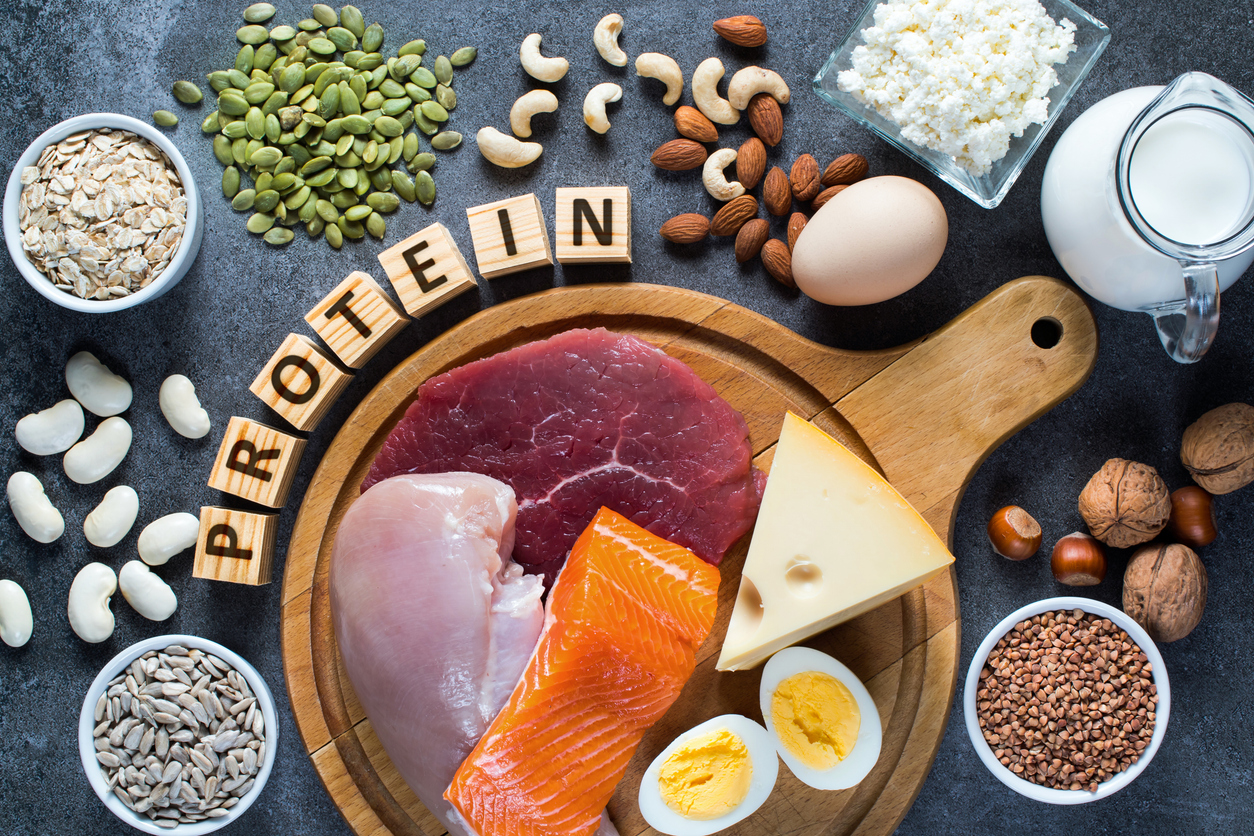

Are You Eating Enough Protein in Midlife? Probably Not.
by Lucy Sugars, Nutritional Therapist
If you’re in your 40s or beyond and feeling more tired, less strong, or finding it harder to maintain muscle or manage your appetite, protein intake is one of the first places I look with clients. And almost without exception, they’re under‑eating it.
Protein needs don’t stay static across life. In fact, as we move through midlife, our requirement for protein increases. Yet many of us are eating less of it, especially earlier in the day.
Let’s break down why protein matters, why midlife is different, how much you actually need, and most importantly how to hit those targets in real life.
What Does Protein Actually Do?
Protein isn’t just about muscle (although that’s a big part of the story). Protein is required for:
- Maintaining and building muscle tissue
- Bone health (muscle strength protects bone density)
- Hormone and neurotransmitter production
- Immune function
- Blood sugar regulation
- Satiety and appetite control
Unlike carbohydrate and fat, the body has no large storage depot for protein. If intake is consistently low, the body will break down muscle tissue to meet basic needs.
Why Protein Becomes More Important in Midlife
From around our late 30s onwards, we begin to lose muscle mass and strength more easily, a process known as age‑related muscle loss. This accelerates through perimenopause, menopause and later life.
At the same time:
We become less responsive to protein (this is called anabolic resistance)
We often eat smaller portions or skip meals
Busy lives mean convenience foods replace protein rich meals
The result? Less muscle, poorer metabolic health, reduced strength, and often increased fat gain, even if calorie intake hasn’t changed much.
Adequate protein, spread evenly across the day, is one of the most effective nutritional tools we have to counter this.
How Much Protein Do You Actually Need?
General population guidelines are too low for most midlife adults.
For healthy adults in midlife, a more optimal intake is often:
1.2–1.6g of protein per kg of body weight per day
Rather than obsessing over daily totals, I encourage clients to focus on per‑meal targets:
30g protein per main meal
10g protein per snack
This supports muscle protein synthesis more effectively than skewing most protein into the evening meal.
Why 1–2 Eggs Is Usually Not Enough for Breakfast
One large egg provides roughly 6–7g of protein.
So: 1 egg = 6g and 2 eggs = 12–14g
For most adults in midlife, this simply isn’t enough to meet the 30g target needed to properly stimulate muscle protein synthesis.
That doesn’t mean eggs are a bad choice, far from it. They just usually need back‑up.
Ways to Build a Higher‑Protein Egg‑Based Breakfast:
2 eggs plus Greek yoghurt with peanut butter on the side
2 eggs plus smoked salmon or lean turkey/chicken
2 eggs plus cottage cheese folded into scrambled eggs
Omelette with eggs and cheese and leftover chicken or lentils
It’s about combining protein sources, not relying on one alone.
What Does 30g Protein Actually Look Like?
Here are some rough examples (portions will vary):
Animal‑Based Options
Chicken breast (120–130g cooked)
Salmon fillet (130–150g)
Lean beef or lamb mince (120g cooked)
Greek yoghurt (200g) + nuts/seeds
Cottage cheese (200–250g)
Vegetarian Options
3 eggs + cheese
Greek yoghurt + whey or plant protein powder
Tofu or tempeh (150–200g)
Lentils or chickpeas plus grains or dairy
Example Day Hitting Protein Targets
Breakfast (30g): Scrambled eggs (2) with cottage cheese stirred in, and rye toast with butter
Lunch (30g): Large salad with roast chicken, olive oil dressing and feta
Snack (10–15g): Greek yoghurt with berries
Dinner (30g): Salmon with roasted vegetables and potatoes
This isn’t extreme or restrictive, it’s just intentional.
Protein on Vegetarian or Vegan Diets
It is harder, but not impossible, to reach higher protein intakes on plant‑based diets.
Challenges include:
- Lower protein density
- Larger food volumes required
- Less leucine (a key amino acid for muscle)
Strategies that help:
- Use protein rich staples (tofu, tempeh, edamame, Greek style soy yoghurt)
- Combine legumes + grains
- Consider protein powders where appropriate
- Be realistic about portion sizes
Vegetarian and vegan diets often require more planning to hit midlife protein needs.
Who Should NOT Push Protein Higher?
Higher protein intake is not appropriate for everyone.
Those who should seek medical or professional guidance include:
- People with chronic kidney disease
- Those with advanced liver disease
- Anyone advised otherwise by their GP or specialist
For healthy kidneys, higher protein within recommended ranges is generally well tolerated — but individual context always matters.
Final Thoughts
If you’re in midlife and not consciously thinking about protein, you’re probably not eating enough.
Prioritising:
- Adequate protein
- Spread evenly across the day
- Combined sources where needed
…can make a profound difference to strength, energy, appetite, metabolic health and long‑term resilience.
Small shifts, especially at breakfast, often deliver the biggest wins.
If you’d like help tailoring protein intake to your body, lifestyle and preferences, that’s exactly the work I do with clients.
